Tuesday, February 26, 2008

Fong juk/Exiled (Johnnie To, 2006)

Photobucket

Johnnie To’s highly mannered, yet sufficiently bullet riddled gangster film tests two of the genre’s most important moral qualities: the importance of friendship vs. the bonds of loyalty. When an ex-member, banished from his home town for attempting to murder his mob boss decides to return home to raise his son, two of his best friends and former colleagues are sent to kill him, while two other friends vow to protect him. It’s a simple, ingenious concept that finds its characters – in between superbly choreographed gunfights – weighing their debts to gang fidelity.

There is a remarkable sequence early in the film in which the protectors and the assassins share cigars together in an unspoken professional understanding, while they await their mark to arrive. Once he does, they allow him to go up to his apartment and each side then sends one of their own upstairs after him. Just before they get down to business, they quietly ensure each man has the same amount of bullets. A violent three-way battle unfolds between the three men, leaving the apartment in near shambles, but when they all run out of ammunition, they simply stop, call in their associates, help the target move into the apartment and have dinner together. Eventually, the assassins and protectors agree that they can’t go through with killing each other or their mark, and vow to work together on some contract killings to get their friend out of town, with enough finances to raise his family.

From here, To sets up a familiar supporting framework. There’s a hooker looking to grab one big score, a cop on the verge of retirement and an absolutely psycho mob boss with a thirst for blood and money. Nevertheless, To’s mastery of the material keeps it from getting stale. It is a pure joy, coupled with some genuine surprises, watching the machinations of the plot click into place like a fine Swiss watch. As the film builds towards its monumental finale, To patiently and thoroughly weaves each strand of the plot into a perfect knot.

It’s rare to watch a film of this nature that treats the entire subject with near existentialism. Tonally, the film evokes the classic French gangster films of Jules Dassin or Jean-Pierre Melville. Behind the camera, To eschews realism for something more painterly. The film contains about four major action sequences, and each one is as carefully realized as the next, with the kind of balletic, yet over-the-top gunplay that John Woo excelled at in his pre-Hollywood days. Even the special effects defy reality as blood explodes in perfume-like puffs of mist rather than thick red streams. For the final sequence, To constructs a hotel set that cuts away the ceilings so he can shoot directly over the action, literally displaying the architecture of his shots.

Whereas American action films continue to aspire to bigger explosions and endless ammunition, To’s film is a exciting breath of fresh air. It makes every bullet, every movement and every word count, making it that much more exciting when the triggers are finally pulled and bodies are hurled almost angelically through the air.

Saturday, February 16, 2008

I Am Legend (Francis Lawrence, 2007)

Photobucket

In a premise that seems to be en vogue of late, I Am Legend is a familiar tale of a country that has become victim to an unnamed, unknown plague which if it doesn't kill you, turns you into a monster, in this case, a variation of a vampire. Imagine the tweaked zombies of 28 Days Later with an allergy to the sun and you'll have the right idea.

While I definitely credit my friend Heidi for warning me in advance that the film was terrible, I was still allured by the film's slick trailer and The Dark Knight preview that would be in front of the IMAX showing of the film. The last film I saw in IMAX was a clearly wrongly projected Starsky & Hutch, so I had forgotten how good films can look on a three story screen. So if anything, I Am Legend looked great. And while I won't quite agree with Heidi that I Am Legend is terrible, it is certainly disappointing.

The biggest problem with I Am Legend is ultimately how empty the film is. This is a film that really didn't need to be more than 90 minutes and even then, it could be shorter. While Will Smith surprises at maintaining a strong screen presence for most of the film, there isn't just enough story here to make it work. The film waits a long time to get to it's third act, and when it does it is hugely unsatisfying. The film also suffers from a variety of plotholes, the most egregious being the shifting intelligence of the monsters. While they are savvy enough to set traps out to capture any humans, it seems they are mentally deficient in getting organized, or fighting in a coherent manner. Director Francis Lawrence does little more than send wave after wave of generic, CGI monsters in the film's final showdown. The monsters even sound generic. While casting avant garde music freak Mike Patton to enact the creature's voices was a masterstroke, the usually creative Patton seems to be held at bay here. The monster's voices are no different than the general squeals and roars you might expect. Patton is an extremely gifted individual behind the microphone and it's a shame his talents weren't put to better use.

The only true surprise of the film, is its relentlessly dark tone. Smith's character isn't particularly likeable, and for a Christmas season blockbuster the film stays grim right up until the end. But for a film that is brave in tone, it fails to take any daring steps narratively, and like much of the New York in the movie, it's completely barren.

Wednesday, February 13, 2008

The Lookout (Scott Frank, 2007)

Photobucket

We all have a daily routine, but what if each day you had to be reminded what those series of small events were - taking a shower, brushing your teeth, going to work - and even what order they had to be done in? For former high school hero and aspiring athlete Chris Pratt (Joseph Gordon-Levitt) this is an everyday nightmare. After a horrific car accident that leaves two friends dead and estranges his former girlfriend, Pratt finds himself living in a cheap apartment with a blind man (Jeff Daniels) and a countless number of labels reminding Pratt of everything from what each kitchen cabinet contains to what nozzle in the bathtub is for the hot water. Attending life skills classes by day, cleaning a bank at night and now an icon of disappointment to his wealthy family Pratt's life in the middle of Kansas is going nowhere fast. One evening, a chance encounter in a bar introduces Pratt to three people who offer him friendship, sex and an opportunity to make something out of his frustrating existence. All they want him to do is to act as a lookout for a heist at the very bank he's working at.

The film's premise, at least on paper, comes dangerously close to being a gimmick: Brain damaged man is engaged into a bank heist. But longtime screenwriter Scott Frank, in his directorial debut, first creates an emotionally rich world in act one before kicking in the heist in the latter half of the film. We watch as Pratt desperately tries to apply for a promotion at the bank or even get the cadence of pickup line (that he wrote down in his always present notebook) right. His life is carefully ordered which helps keep his sanity intact, but when that order is challenged not only is the tension felt but the emotional fallout is equally devastating. But the film wouldn't succeed if the supporting characters weren't as well sketched out as they are here. Pratt's roommate Lewis is the film's humor and logic. He speaks the audiences fears and keeps Pratt's anger in check, and is a reminder to him that while things are tough, they could be worse. The other friend is Deputy Ted, played with a charming earnestness by Sergio Di Zio. Though he is onscreen for no more than ten minutes he plays a pivotal role in how the heist unfolds and as the audience grows attached to him, the grip around our hearts is tightened when this small town cop is suddenly involved in a big city crime.

Scott Frank already has a tremendous reputation with Get Shorty, Out Of Sight and Minority Report to his name. With The Lookout he settles comfortably into the director's chair. Much like fellow colleague Tony Gilroy, who also asserted his directorial prowess for this first time last year with Michael Clayton, Frank also shows flair with a tightly focused script, solid writing and sharp editing choices. The Lookout is another notch in Frank's belt, and one of the finest, shrewdest heist films in years.

Monday, February 11, 2008

The Golden Compass (Chris Weitz, 2007)

Photobucket

After the monumental financial and critical success of the Lord Of The Rings trilogy New Line studios were eager to launch another franchise that would reap the same rewards. The recipe for the Lord Of The Rings was certainly simple: a built in fanbase; a director with a reverential and dedicated love of the source material; and a savvy plan to shoot the entire trilogy simultaneously with a relatively modest (given the scope of the project) $300 million budget.

Perhaps still reeling in the excessive spoils of the Lord Of The Rings, New Line ignored virtually every rule that made that trilogy a worldwide phenomenon. The one thing they got right was in acquiring the rights to Philip Pullman's "His Dark Materials" trilogy, a cult favorite. However, in every other aspect of the production they got it wrong. Prior to this film, director Chris Weitz - who even left the project during pre-production stages - was previously known for directing American Pie, the tepid Chris Rock fantasy Down To The Earth and the sort of well received Hugh Grant film, About A Boy. Where Peter Jackson cut his teeth on fantasy films, Weitz is a rookie to the genre. Next, the first film alone cost an astronomical $200 million dollars. Finally, where the Lord Of The Rings tried to stay as close to the source as possible, leaving as little out as they could, prior to the release of The Golden Compass fans were already openly appalled at their perceived watering down of the thematic elements of the novel and the removal of several key sequences.

Going into the film, I had not read the books, but as soon as the cinema darkened I could already tell I was being given the Cliff Notes version. The film begins with a lengthy voiceover to explain the various terminologies and aspects of the plot we're about to be thrown into. Instead of a fascinating and organic learning process, the audience is given just enough to understand what is going on. Clearly trying to cram as much of the book as possible into two hours, Weitz simply moves the film along from plot point to plot point. The characters themselves are mere sketches and are simply divided into good guys and bad guys. I won't bore you with recounting everything here, but simply put there is a young girl who holds the fate of the entire world in her hands as she battles fascistic government forces and begins a quest that will dismantle their plans for complete control over the population. Her secret weapon? The titular, shiny navigation device. Her allies? A cowboy with a Texan drawl, a badass armored polar bear, a band of gypsies and a bevy of beautiful witches.

I'm giving the film more difficulty than I ought because, it is a generally entertaining movie. But there is a problem when one of the most fascinating characters in the film is a CGI polar bear. That said, the cast here is uniformly excellent. Newcomer Dakota Blue Richards holds her own against a roster of seasoned actors, while the constantly underrated Nicole Kidman not only looks gorgeous in about a half dozen fantastic outfits but is particularly devilish as the film's quasi femme fatale. The last forty five minutes of the film contain some great set pieces including an amazing, animated polar bear fight sequence that left the theater literally gasping with its shocking conclusion. The story itself is actually quite good, if run through rather perfunctorily.

The film did dismal business in the United States, but scored better in the overall worldwide box office numbers. But those numbers are nothing close to what the Lord Of The Rings took in and given the cost of The Golden Compass, most analysts consider it to be a financial failure. That, combined with the fact that none of the A-list cast is signed on for any more films, the chance of a sequel seems unlikely. Pullman fans will have to enjoy what they have here even it is served up somewhat tepidly, while fantasy fans will have to just sit and await the two-part Hobbit film now in pre-production to feed their Lord Of The Rings sized hunger.

Sunday, February 10, 2008

Kiss Me Deadly (Robert Aldrich, 1955)

Photobucket

When I discovered the world of classic film, I became particularly obsessed with gangster and film noir pictures. I watched them incessantly, picking up anything with Humphrey Bogart, James Cagney or Edward G. Robinson sneering on the VHS or DVD cover. When I had run through those, I read about film noir and immediately picked up any film of note, loving every last morsel of tough dialogue and shadowy atmosphere. However, there are a few films I've missed along the way and one of the biggest, until recently, is the generally revered Kiss Me Deadly.

Based on the novel by Mickey Spillane and the fourth film by the heralded genre director Robert Aldrich, Kiss Me Deadly occupies a somewhat dated spot in film noir history. To be certain, film noir in general, with its colorful language and aesthetic boundaries dates itself, but the best films transcend those trappings to become timeless thrillers or existential exercises. Unfortunately, when the plot hinges on a particular moment in world history as Kiss Me Deadly does, the results are awkward when watching them over fifty years later.

The film definitely starts off with an effective bang. A woman comes running out of the brush near the side of a highway wearing nothing but a trench coat and screaming for someone to stop. A handsome man, with a convertible and look that says he's seen it all before, picks her up. Even though a news bulletin gives her away as a wanted woman, the man plays it cool, guiding her through a police stop and listening to her story. She is gripped by fear, worrying that someone is out to get her - and she's right. She doesn't get very far in telling her tale when the car is run off the road and she's killed. Fade to a clever reverse credit scroll.

The man in the car is private eye Mike Hammer and of course, he feels duty bound to find out who killed the mystery woman and why. Thus begins a Hammer's journey through the nameless city's seamy underbelly, as he interviews a variety of low lives to unravel this case. Naturally, the police tell him to back off as do an assorted array of baddies, but Hammer keeps his jaw squared and his eyes steely.

Behind the camera, Aldrich shows a keen eye. He keeps the viewer off balance by shooting from high up, placing the camera in corners, accenting the depth of the hallways and staircases, while throwing ominous shadows all over the place. But none of it is over the top as Aldrich maintains a steady atmosphere without it becoming a crutch. Additionally, the film benefits from some nice on location shooting around Los Angeles, adding to the heat infused tension as the film moves forward.

Unfortunately, at the midpoint of the film it is revealed that a box of nuclear material is at the center of the growing body count of brooding bad guys. What would have been a legitimate scare near the beginning of the Cold War becomes a device that throws believability right out the window. Why is the government not involved if the police are already aware of what is going on? Are we to believe that nuclear material can be stored in a box in a gym locker and is only dangerous when opened? From here the film becomes tiresome and hysterical, right up to it's finale. The 1955 theatrical release cuts about one minute from the ending, leaving things ambiguous while suggesting that every character we've come to know over the past hour and a half ends up dead. The restored ending, featured on the MGM DVD, brings back the missing sixty seconds and offers up something more conventional if just as unsatisfying.

Kiss Me Deadly is ably directed, with a strong cast and a proper assortment of eccentric locals and shifty characters. But when viewed fifty years later, it simply doesn't hold up.

Sunday, February 3, 2008

The Savages (Tamara Jenkins, 2007)

Photobucket

There is a key moment in the final third of Tamara Jenkins' beautifully crafted The Savages, when a student asks her theater teacher, and Bertolt Brecht devotee Jon Savage (Philip Seymour Hoffman) what the difference between plot and narrative is. It's a sly wink on behalf on Jenkins, who also wrote the screenplay, as her second full length feature quietly and confidently side steps a traditional story arc for something far more organic.

The film traces the difficult decision of siblings Jon and Wendy Savage (Laura Linney) to place their aging father, who is suffering from dementia, into a nursing home. Still dealing with the effects of a less than perfect childhood in which their mother left and their father never seemed to be present, Jon and Wendy struggle to balance their feelings of the past to deal with the present situation. While the subject matter is serious, the tone is appropriately much more complex. Jenkins' intelligent screenplay, is by turns hilarious and heartbreaking, and thankfully avoids self indulgent hand wringing, big dramatic speeches or an overwrought message, favoring illuminating moments found in the smallest of spaces.

As the film progresses, the somewhat estranged Jon and Wendy form a quiet bond as they care for their father. Both deliriously intelligent (anyone with a remote knowledge of liberal arts college courses will chuckle at many of the references peppered throughout), with a shared love of the theater, their time together also brings to the surface some harsh and at times similar realities about their personal lives. It isn't long before a tentative, unspoken alliance is made with a quiet support and respect for each other.

There are no reconciliations or easy answers here. As their father slips further away into his disease, there is hard fought acceptance and a desire by Jon and Wendy to at least try and connect with him before he's gone. Their efforts are genuine and at times touching, but always leavened by the fact that their father's time is almost up. Time passes, and a small part of each of them grows up a little more. No, they haven't quite figured out all the angles yet of their personal lives, and maybe they never will, but with a new found effort to stay connected, the Savages realize that sometimes family are the only ones who can understand you.

Tuesday, January 29, 2008

The 10 Best Films Of 2007

I know it's coming a bit late, but I had wanted to make sure I saw as many of 2007's films before finalizing my list. It was a great year for film, which made it that much tougher to whittle the list down to just ten. It could easily have been a list of fifteen or twenty solid films, but these are the ten that made it a year to remember:

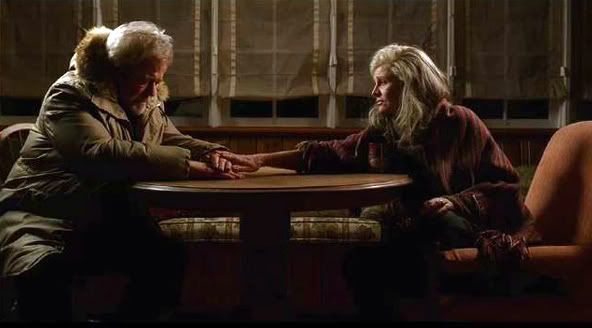
1. Away From Her (Sarah Polley)
Photobucket

29 year old Sarah Polley's directorial debut, based on Alice Munro's short story A Bear Came Over The Mountain displayed a grace and maturity that was unequalled by any other filmmaker or film this year. Tackling the tough subject of Alzheimer's would be a difficult task for any director, but that Polley does so with such careful consideration and measured tones makes her film all the more remarkable. There are no big emotional scenes or dramatic crescendos, but simply the fallout of diagnosis marked by quiet loss, glimmers of hope and understated strength. Though much of the acclaim for the film has fallen on Julie Christie's shoulders, the entire cast is remarkable. But ultimately, the film belongs in the hands of Polley, and with this film, she marks herself as a serious artist, an undeniable talent and one of the most promising young directors to arrive in ages.

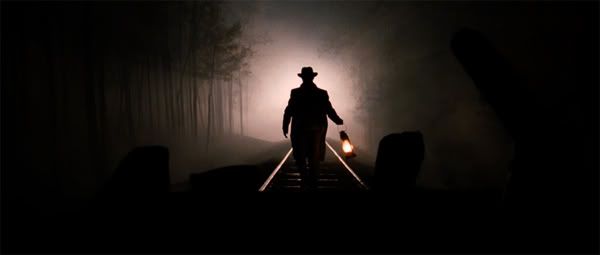
2. The Assassination Of Jesse James By The Coward Robert Ford (Andrew Dominik)
Photobucket

On paper, the delayed release dates and rumors of post-production battles between director Andrew Dominik and Warner Brothers spelled disaster. As Dominik struggled to bring his initial four-and-a-half-hour cut of the film down to something manageable, Warner Brothers occasionally brought in outside editors to take a crack at it. Even producer Ridley Scott and producer/star Brad Pitt had their input. Eventually, Dominik delivered his final cut, and Warner Brothers, who already had reservations about Dominik's contemplative western, ultimately dumped the film into limited markets with few press screenings or advertising. The film became a cause celebre among films fans and it's easy to see why. The Assassination Of Jesse James By The Coward Robert Ford is a visually stunning, ruminative film about the illusion of celebrity, the intangibility of myth and the allure of fame. Brad Pitt is solid in the lead as a slowly unraveling and paranoid Jesse James, but the film belongs to Casey Affleck in his breakout performance as Robert Ford. All raw nerves and wounded pride, Ford struggles to reconcile the real Jesse James with the hero he read about in dime store novels. Structured like the very serials that Ford read, and guided by an erudite voiceover narration, Dominik's film is a fascinating journey into myth and memory.

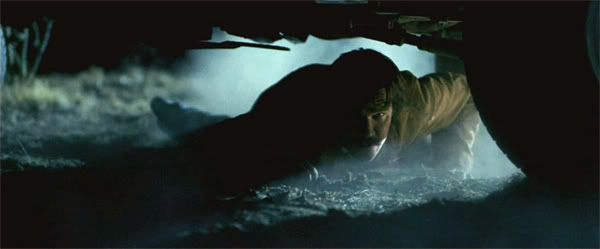
3. No Country For Old Men (Coen Brothers)
Photobucket

The Coen Brothers returned this year with their best film in over a decade, and perhaps one of the most accomplished films of their careers. To explain the film would take away many of the surprises, but ultimately, the film concerns three men who desperately try to outrun their individual paths. Sheriff Bell (Tommy Lee Jones), Vietnam veteran Llewelyn Moss (Josh Brolin) and relentless killer Anton Chigurgh (Javier Bardem) tempt, dodge and ultimately confront the fates their actions inevitably lead them to. The much discussed ending is perfect, adding a note of terrifying uncertainly to the Coen's ultimately grim assessment of their characters. Flawlessly constructed and heart-stoppingly suspenseful, the Coens have raised their already high bar to a whole new standard.

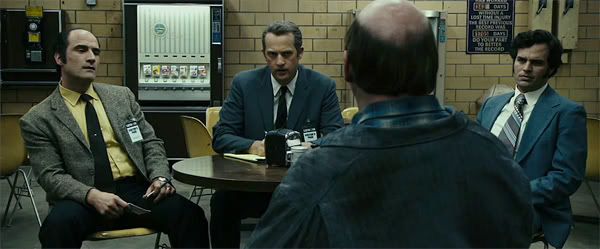
4. Zodiac (David Fincher)
Photobucket

For his sixth film, David Fincher returned to the serial killer genre that made his name famous when he directed Se7en. However, where that film explored the dark motivations of the fictional killer at its core, Fincher’s masterful Zodiac terrifies in completely different ways. Based on the true story of the Zodiac killer that cast a haunting shadow over the San Francisco area during the late '60s and early '70s, it is the seemingly random nature of the slayings and its victims that chills most of all. Fincher's film is less concerned with the methods and mind of the killer, than with the gruelling task of the policemen and press who desperately tried to overcome bureaucratic red tape, mountains of false leads and limited resources to capture him. What begins as a standard genre tale patiently evolves into a film about obsession. As the killer remains unidentified and years begin to pass, it's the lone work of Robert Graysmith, a former political cartoonist that keeps the case alive. His home becomes a library of boxes filled with notes and files, while his marriage eventually succumbs to his unrelenting quest for an answer. This obsessive nature carries over behind the camera as well, as Fincher, from the opening frame using the oldschool Paramount logo, to the meticulous set design, to the gorgeously rendered CGI backdrops doesn't miss a single detail in reconstructing 1970s San Francisco. And as the film spans several decades, Fincher employs some clever tricks to mark the passage of time, from the fast frame of a skyscraper going up to the now famous blackout sequence (available on the director's cut DVD) which uses an audio montage of pop hits and news sound bytes to mark the transition from the '70s to the '80s. Fincher's control behind the camera and in the editing room has never been stronger. In a film that gives the audience a dearth of information including multiple suspects, locations and clues, Fincher conveys every fascinating morsel clearly. And we can't help but to be become as obsessed as the filmmaker and his characters as they desperately try to close the case.

5. There Will Be Blood (Paul Thomas Anderson)
Photobucket

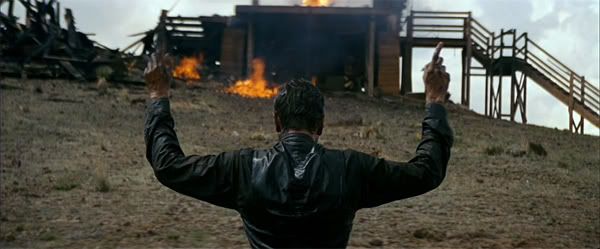
Paul Thomas Anderson has never been short on ambition. Whether it has been Magnolia, his sprawling tale about lost souls in Los Angeles; Boogie Nights, the seemingly unfilmable story about the rise and fall of a young porn star or Punch Drunk Love, a slightly skewed fairy tale romance involving pudding, a harmonium and Adam Sandler, Anderson has proven himself to be up to the challenge. However, when a teaser for There Will Be Blood appeared online last summer, no one could have predicted how much of a left turn Anderson had decided to take. Moving away from his safe cast of regulars, and even his usual scoring collaborator Jon Brion, There Will Be Blood is Anderson's bravest, boldest departure yet. Based loosely on Upton Sinclair's Oil!, the film is equal parts Treasure Of The Sierra Madre , Citizen Kane and The Shining that all combine into something that defiantly avoids categorization. Everything from the brilliant, nearly silent opening twenty minutes, to Jonny Greenwood's sparse, avant garde score to Daniel Day Lewis' already legendary portrayal of ruthless oil prospector Daniel Plainview defies convention. While the Great American Novel has yet to be written, Paul Thomas Anderson, with unparalleled verve, audacity and control of his craft comes astonishingly close to creating the Great American Film. Greed, religion, blood, oil and ambition: Anderson covers his thematic territory fearlessly and his ability to indentify with the last quality is what makes this film one of the most audacious filmmaker statements to hit screens all year - or any year.

6. Michael Clayton (Tony Gilroy)
Photobucket

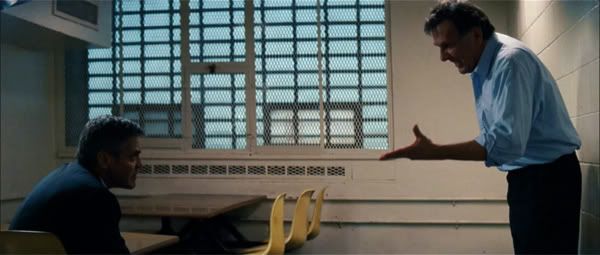
Denouncing corporations like Starbucks, McDonald's or WalMart seems to be almost a reflex these days. Most people would tend to agree some the corporate business practices of these companies and their ethics leave much to be desired, but it's hardly a revolutionary stance. The question put forth by screenwriter Tony Gilroy in his directorial debut Michael Clayton is: "What if you're part of the machine?" While the plot revolves around a legal case involving the shady dealings of a Monsanto-like corporation, it is ultimately about the ethical choices we make in trying to put food on the table, keep the lights on and take care of the ones we love. What if the company we work for creates a product that might harm people? What if our position at a company indirectly makes someone's life difficult? What are we willing to live with and what are we willing to sacrifice? These are the kind of questions that Gilroy's intelligent script quietly draws out. As the film progresses, the lines of personal ethics are drawn and redrawn, as lives become shattered and people seek redemption. A smart, engaging film, Gilroy's first effort is a welcome throwback to the lean, muscled genre pictures of the '70s twisted with a touch of a modern day politics.

7. Sunshine (Danny Boyle)
sunshine

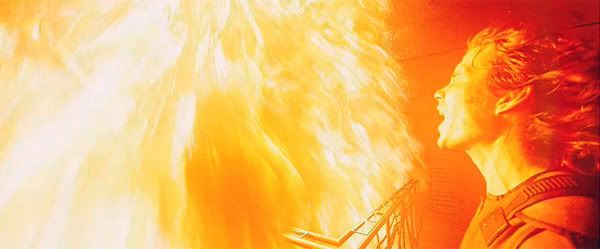
Director Danny Boyle has never been one to stick to a specific style or genre. From the drug fuelled shenanigans of Trainspotting, to the redefined zombies of 28 Days Later... to the family fantasy of Millions, Boyle has enthusiastically thrown himself full throttle into new challenges with each picture. When Boyle's next film was announced to be a sci-fi epic about a mission to reignite a dying Sun, the shift in stylistic gears was hardly surprising. If that was somewhat expected, then the depth of Alex Garland's script was the real treat. What begins as a 2001: A Space Odyssey styled meditation on man and the universe, quickly mixes elements of Agatha Christie's Ten Little Indians and religious faith to create a film that is a surprisingly moving ode to our place in the galaxy. That Boyle manages to get these ideas across in the construct of a thriller is all the more powerful. Sunshine pays tribute to the classic science fiction films that came before while deservedly carving out its own place alongside those works. So what's Boyle up to now? He's in India filming a comedy about an illiterate child who wants to become a contestant on the Hindi version of Who Wants To Be A Millionaire? Once again, Boyle is going where the challenges are, and as long as he keeps doing that, audiences are in for years of unique, new films from an under-appreciated director.

8. Into The Wild (Sean Penn)
Photobucket

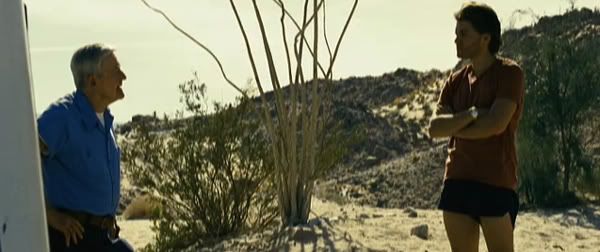
The premise of the film sounds like a college activist cliche. A university graduate gives away his savings, gets rid of his possessions, burns up his social insurance card and decides to live off the grid and discover America. Add vocal activist Sean Penn to the mix and you have the recipe for a strident polemic against contemporary America. But that's not what happens. Based on a true story, Penn's film is less concerned with the politics behind Christopher McCandless' decision than with the journey. Penn's direction works because it never devolves into simpleminded judgments or pat summaries of the characters. What emerges is a complex story of failed parenting, mule-headed youth, idealistic dreams all while paying tribute to an America that is slowly disappearing to strip malls and box stores. The film plays out like a long form version of the closing, moving sequence in Spike Lee's 25th Hour in which the father of a convicted felon considers for one moment, helping his son escape his fate by driving him across America, showing him the wonders of such a huge country that he has yet to experience. In many ways, Penn's film shares Lee's heart. As we follow McCandless across America to his final destination - Alaska - Penn's on location shooting beautifully captures the oddities, wonders and beauty of some of the most unique sites on this continent. While Penn can come across as simplistic and abrasive with his politics off camera, behind it, he displays a great composure and a genuine admiration for the richness of the people and places that span the land between the oceans. And if McCandless' ultimately heartbreaking journey was worth anything, it was for those moments when he found a place for himself in a world that all too often moves too quickly.

9. The Bourne Ultimatum (Paul Greengrass)
Photobucket

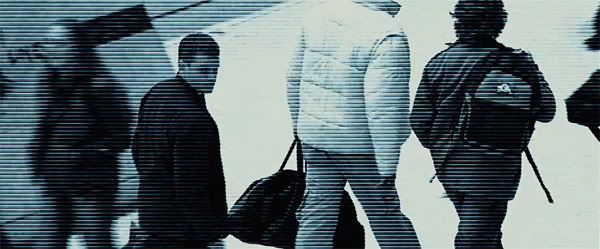
Bold themes? Nope. Groundbreaking narrative technique? Nope. A moving, touching story about a struggle to overcome a personal obstacle? Hell no. So what makes The Bourne Ultimatum one of the year's best films? Nothing but a nearly flawless execution of directorial control and editing acumen. In a cinematic world where studios foist upon audiences unnecessary and ridiculous sequels to Die Hard and Rambo, the Bourne series continues to be a breath of fresh air, pumping new, vibrant blood into the action and spy genres. The third installment, which finds Jason Bourne on a quest to find out why and who made him into a ruthless assassin, is easily the best of the lot. Lean and efficient there isn't a moment wasted here, as we follow Bourne from England to Spain to Morocco and finally the United States as he tries to find answers. Greengrass ups the pulse, by shooting many of the fight sequences with handheld digital cameras requiring editing so crisp and quick it would make MTV cry. Intentionally breathless and relentless paced the Bourne Ultimatum is a thriller for the digital era with the sensibilities of classic spy films gone by.

10. 3:10 To Yuma (James Mangold)
Photobucket

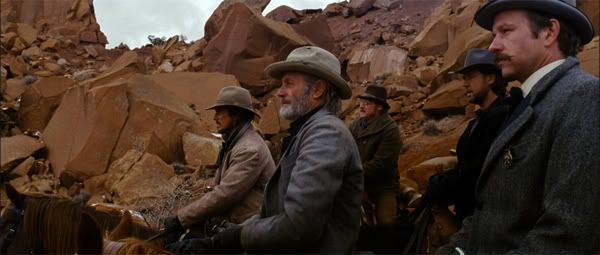
Like an American twin of Danny Boyle, James Mangold has also been a difficult director to pin down. His debut feature, Heavy was an elliptical, gorgeous and criminally underappreciated tale of unrequited love and suppressed ambition. From there he went on to man such diverse films as Cop Land, Girl, Interrupted and Identity before hitting Academy gold with the Johnny Cash biopic Walk The Line. 3:10 To Yuma, a remake of the minor 1957 Delmer Daves classic, is about the wily cat and mouse game between outlaw Ben Wade and his prison escort, rancher Dan Evans. Mangold wisely doesn't stray much from the original, and allows his two leads - Russell Crowe and Christian Bale - to flesh out the characters more fully, while darkening the edges around the film to play better for a modern audience. While films like Unforgiven and the aforementioned Assassination Of Jesse James By The Coward Robert Ford aspire to greater thematic goals, Mangold's film is unique in being one of the rare westerns in recent memory that wants nothing more to be an entertaining popcorn chomper. On that note, the film succeeds brilliantly, building effectively to its memorable final showdown.